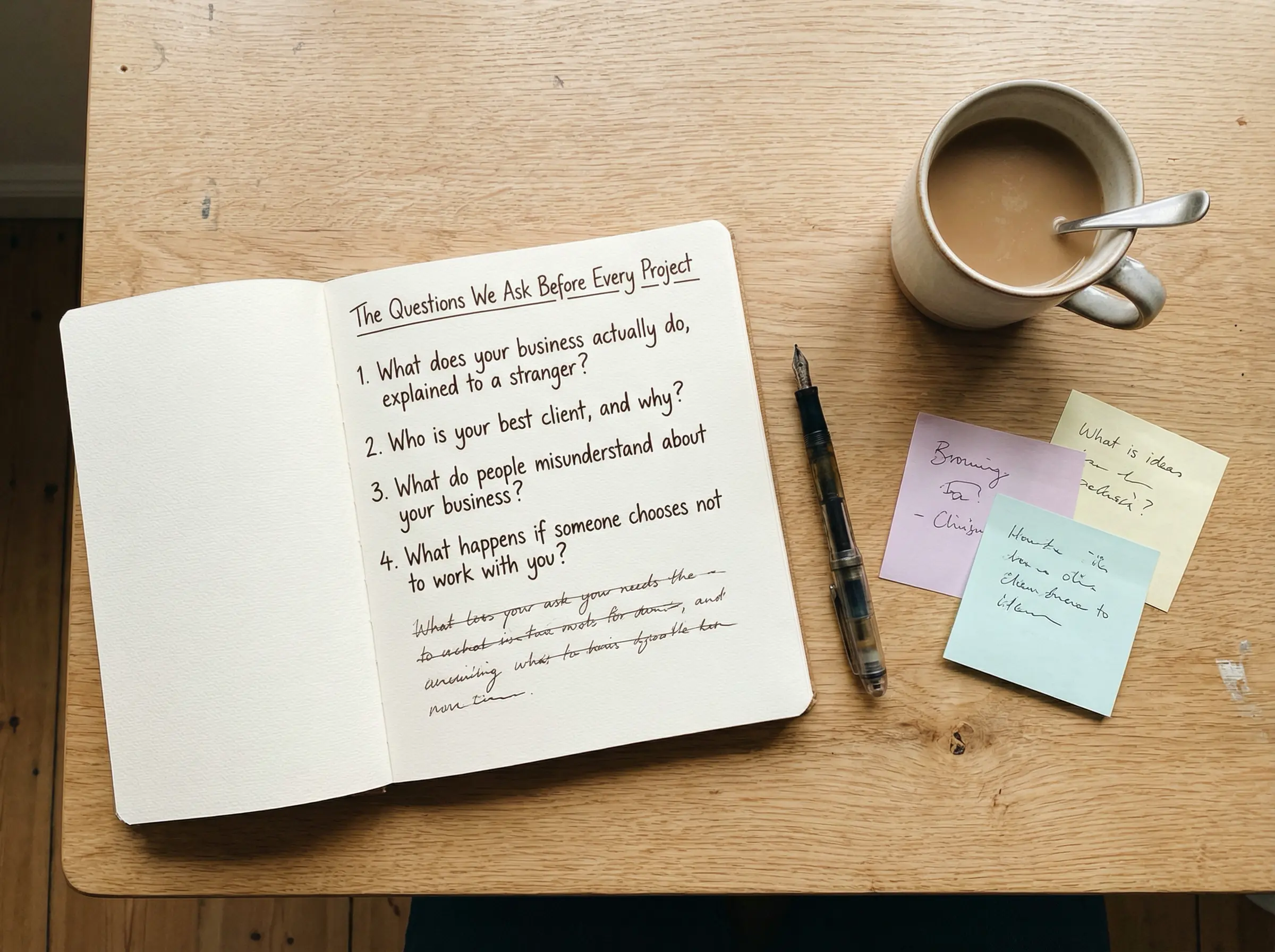
Most creative projects fail before anyone opens a design file.
They fail in the gap between what a business thinks it needs and what it actually needs. A client says "modern logo," but means "I want to look credible to enterprise buyers." Another says "clean website," but the real problem is visitors can't figure out what the company does within five seconds.
The design isn't the hard part. Clarity is the hard part.
That's why we front-load every project with questions. Not a form. Not a brief template we send over and hope gets filled out. A conversation.
Here are eight questions we return to again and again. They work whether you're hiring us, hiring someone else, or even trying to get clear on your own brand.
Eight questions that shape every project
1. What does your business actually do, explained to a stranger?
This sounds basic. It's not.
Many business owners have spent so long inside their work that they describe it in industry shorthand or internal language. We want the version you'd give someone at a dinner party who politely asked what you do.
If that answer takes more than two sentences, we have work to do before we touch any visuals.
2. Who is your best client, and why?
Not your biggest client. Not your most famous client. Your best one.
The client who:
- Pays on time
- Respects your expertise
- Refers others
- Makes the work enjoyable
We want to understand who that person is so we can build a brand that attracts more of them. Design is a filter. It should pull the right people in and signal to the wrong ones that they should look elsewhere.
3. What do people misunderstand about your business?
Every company has a gap between perception and reality.
Maybe people assume you're more expensive than you are. Maybe they think you only serve a certain industry. Maybe they confuse you with a competitor.
These misunderstandings tell us where the messaging needs to do heavy lifting. The brand's job is to correct the record before a prospect even reaches out.
4. What happens if someone chooses not to work with you?
This question gets at the cost of inaction.
- If a potential client decides to do nothing, what do they lose?
- If they go with a competitor, what's different about that experience?
Understanding the stakes helps us write copy that creates urgency without resorting to pressure tactics. The goal is to make the decision feel clear, not manipulated.
5. What's the one thing you want someone to remember after visiting your website?
Not five things. One.
Forcing a single answer reveals priorities. If everything is important, nothing is.
This question helps us build hierarchy into the design and messaging. The homepage can't do everything. But it can do one thing exceptionally well.
6. How do your clients describe you to other people?
This is gold.
Testimonials and referral language often contain better copy than anything a marketing team could write. We listen for the specific words clients use.
If three different people mention "easy to work with," that phrase probably belongs on the website.
Real customer language beats polished marketing speak.
7. What would make this project a failure?
We ask this directly because most people are clearer about what they don't want than what they do.
Common answers we hear:
- "I don't want it to look dated."
- "I don't want to be confused with cheap competitors."
- "I don't want my website to embarrass me when I send it to a lead."
These anti-goals are useful. They set boundaries and reveal what's at stake emotionally, not just strategically.
8. What does success look like in six months?
Design isn't the destination. It's a tool to reach a business outcome.
We want to know:
- Are you trying to raise prices?
- Attract a different type of client?
- Launch a new service?
- Enter a new market?
The answer shapes everything from photography style to tone of voice to which pages even need to exist.
Why questions matter more than answers
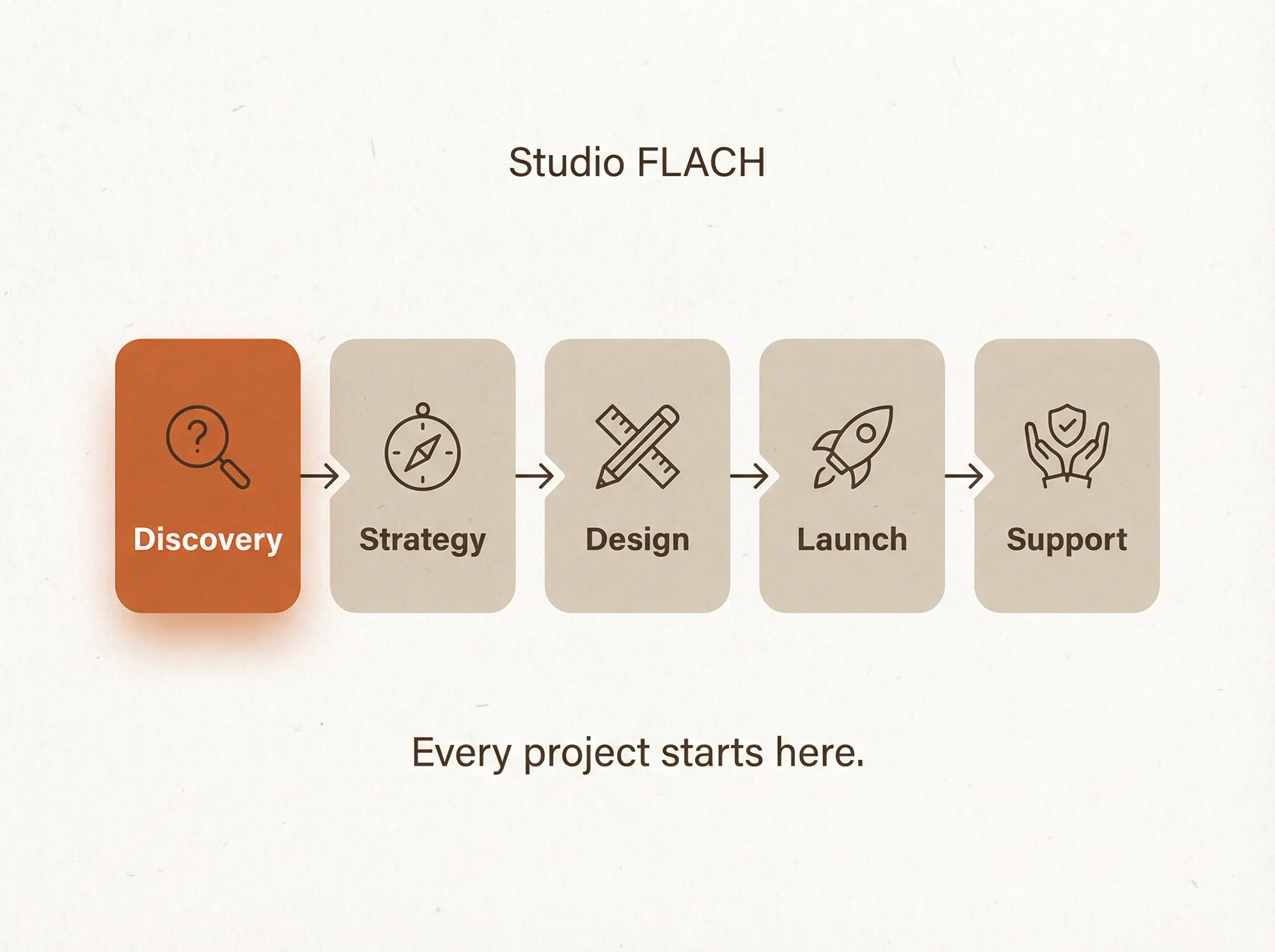
At Studio FLACH, our process starts with Discovery: Finding Your Foundation.
This isn't a checklist or a rushed call; it's a conversation where we listen to your story, your goals, and what makes your business unique.
The questions above aren't about extracting information. They're about building understanding.
When we know why something matters to a client, we can make better decisions throughout the project without needing approval on every detail.
Good questions also protect both sides. They surface misalignment early. If we ask "What does success look like?" and a client says "Going viral," we know we need a conversation about realistic expectations before signing anything.
Use these questions on anyone you're considering hiring
If you're evaluating creative partners, pay attention to the questions they ask you.
- A studio that jumps straight to "What colors do you like?" is designing decorations.
- A studio that asks "What do people misunderstand about your business?" is designing a tool for growth.
The quality of questions signals the quality of thinking. And the quality of thinking determines whether the final product actually works.

