
"What's this going to cost me?"
It's the question every business owner asks before starting a creative project. And for years, the industry's answer has been maddeningly vague: "It depends."
Depends on what? Scope changes. Revision rounds. How many meetings we need. Whether the project takes longer than expected.
This uncertainty creates a strange dynamic. The client is nervous about runaway costs. The creative team is defensive about tracking every hour. Both sides end up focused on the wrong thing.
We use fixed pricing for every project at Studio FLACH. Not because it's easier for us. It's actually harder to scope accurately upfront. We do it because it changes the entire relationship for the better.
The Problem with Hourly Billing
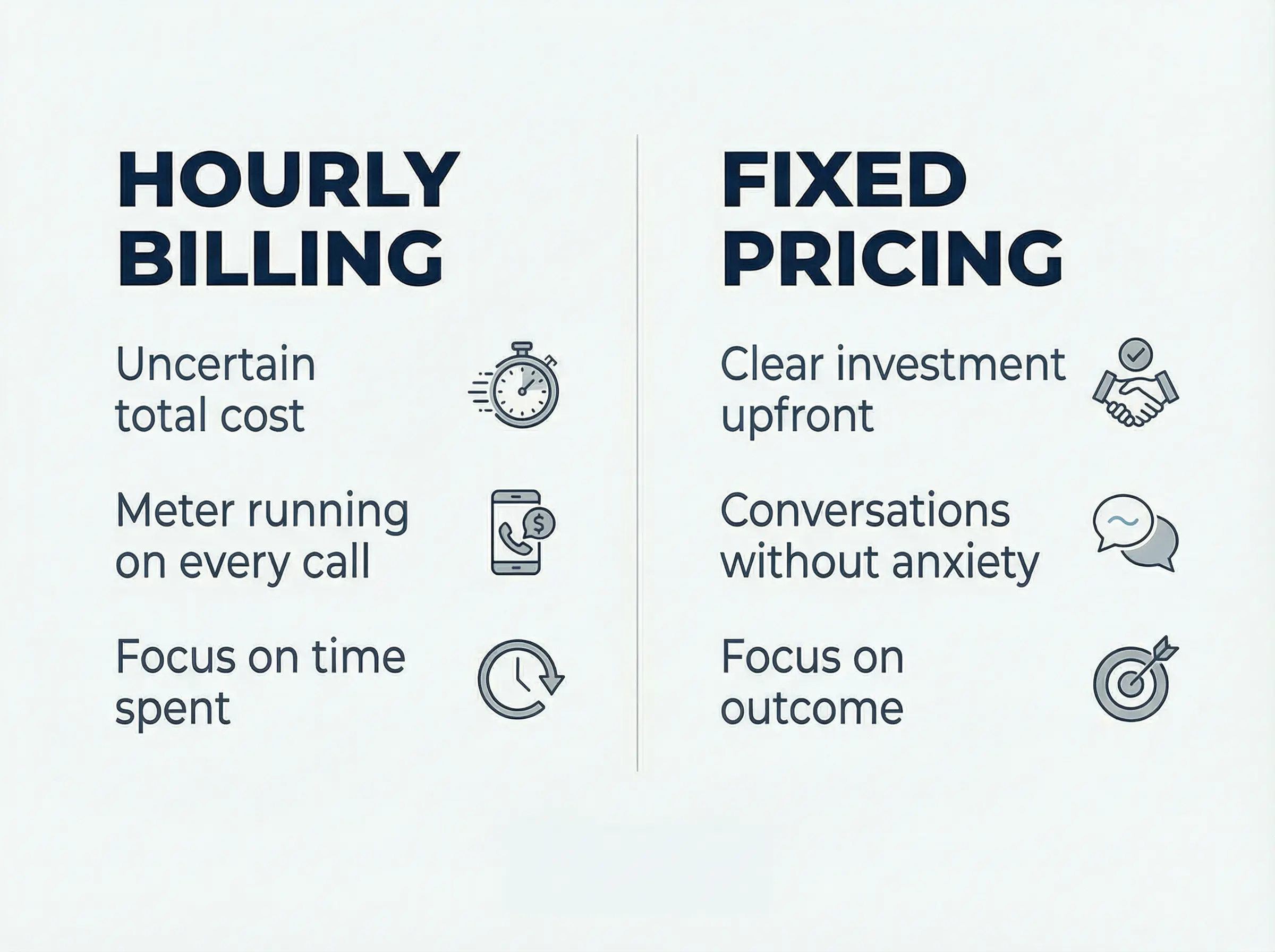
Hourly billing sounds fair on the surface. You pay for the time spent. Simple.
But it creates misaligned incentives.
The faster a designer works, the less they earn. Efficiency gets punished. Meanwhile, the client hesitates to ask questions or request changes because every interaction feels like the meter is running.
This dynamic breeds distrust:
- Clients wonder if tasks really took that long
- Designers feel scrutinized for their process
- Nobody is thinking about the work itself
There's also the estimation problem. "We think this will take 40-60 hours" isn't a budget. It's a range with a 50% swing. Try planning your quarter around that.
What Fixed Pricing Actually Means
Fixed pricing means you know the full investment before the project starts. No surprises. No awkward conversations three weeks in about budget overruns.
For a brand identity project, you'll see one number. For a website, one number. That figure covers our complete process from discovery through final delivery.
This doesn't mean we rush through projects or cut corners to protect our margin. The opposite, actually.
Because we've already agreed on the price, we can focus entirely on doing the best work possible. We're not watching the clock. We're watching the outcome.
It also means we ask better questions upfront. To price accurately, we need to understand your business, goals, and constraints before we quote. That discovery conversation isn't overhead. It's how we ensure the project is set up to succeed.
Why Fixed Pricing Works Better

For Clients
You can make a real decision. When you know the exact cost, you can evaluate whether the investment makes sense for your business right now. You can compare it against other priorities. You can plan your cash flow.
You can stop worrying mid-project. Once we start, you don't need to wonder if that extra feedback round is going to blow your budget. If we agree something needs more exploration, we explore it.
You can focus on the outcome. Instead of managing hours, you manage results. Does this design accomplish what we set out to do? That's the only question that matters.
For Us
We can do our best work. When a project needs more thinking, we think more. When a direction isn't working, we pivot without calculating the cost of that pivot. Creative work doesn't happen in predictable increments. Fixed pricing gives us room to follow the work where it needs to go.
We attract better clients. People who choose fixed pricing tend to value outcomes over activity. They care about results, not receipts. Those are the clients we want to work with.
We build trust faster. Removing money anxiety from the relationship lets us focus on collaboration. Our clients don't see us as vendors running up a tab. They see us as partners invested in their success.
How We Make It Work
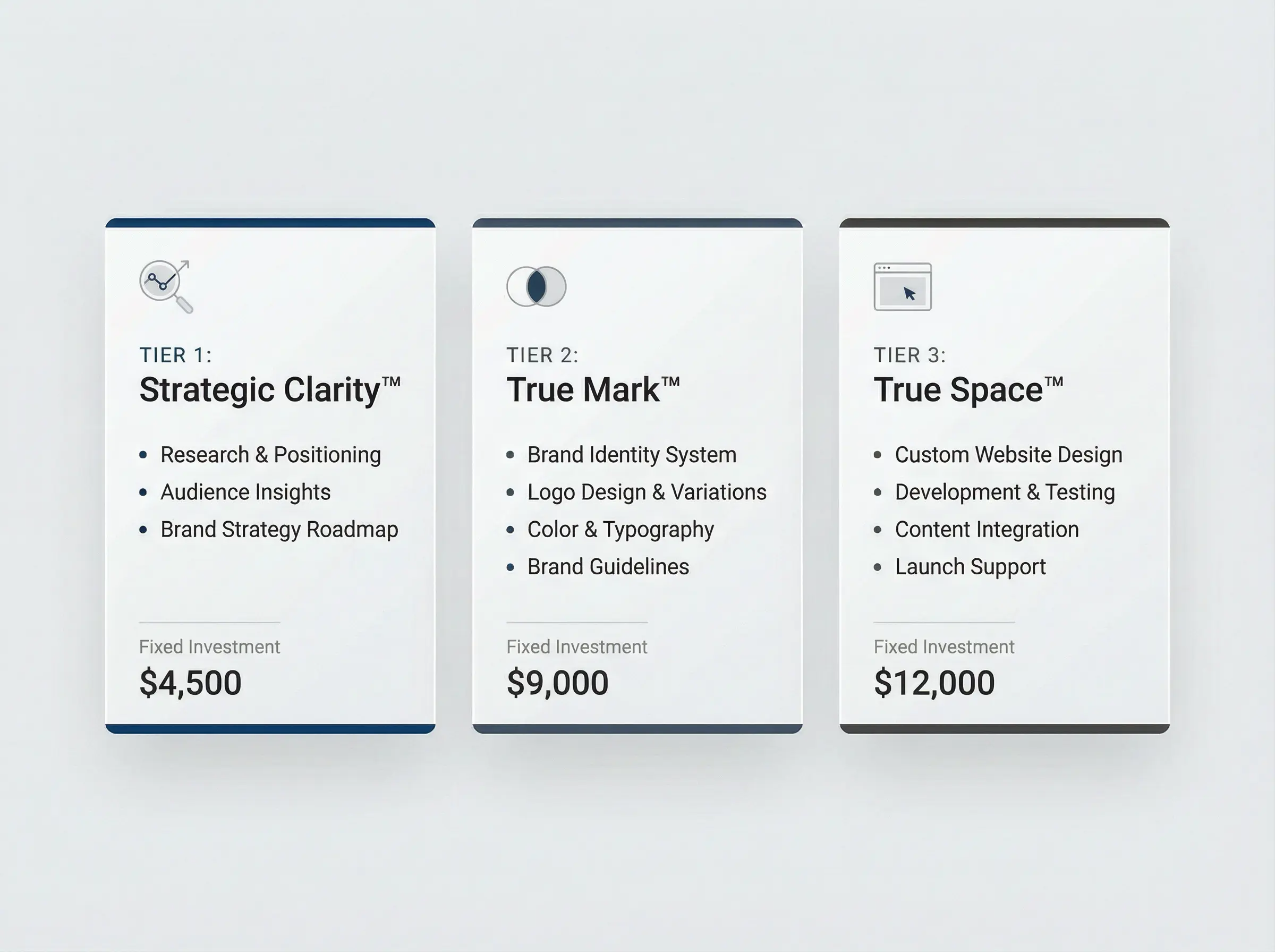
Fixed pricing requires discipline on our end. We've refined our process over ten years to scope projects accurately. We know what a brand identity requires. We know what a website build involves.
That doesn't mean every project is identical. It means we have clear frameworks that flex to accommodate different business sizes and complexities.
Our Approach
- Tiered options so you can choose the level that fits your needs
- Transparent inclusions with clear definitions of what each tier covers
- Flexible payment structures that work for different cash flow situations, whether paying upfront for a discount or spreading the investment over installments
The Trade-Off
Fixed pricing requires clearer scope upfront. We need to understand what we're solving before we commit to a price.
That means:
- We ask a lot of questions early
- We define deliverables precisely
- We document assumptions so nothing gets lost
This isn't bureaucracy. It's protection for both sides. You know what you're getting. We know what we're delivering. There's no room for assumptions to derail the project later.
When Scope Changes
If the scope genuinely changes mid-project (you decide to add a product line, or a competitor launches something that shifts your positioning), we address it openly. We'll scope the additional work separately with its own clear price.
No surprises. No hidden fees. Just honest conversation.
A Different Kind of Relationship
Pricing shapes how people work together. Hourly billing creates an adversarial undercurrent, even when everyone has good intentions. Fixed pricing builds partnership.
When you hire Studio FLACH, you're not buying hours. You're buying an outcome:
- A brand identity that earns trust
- A website that converts visitors
- Strategic clarity that guides your decisions
The price reflects the value of that outcome. Not the time it takes us to create it.
That's a better deal for everyone.

