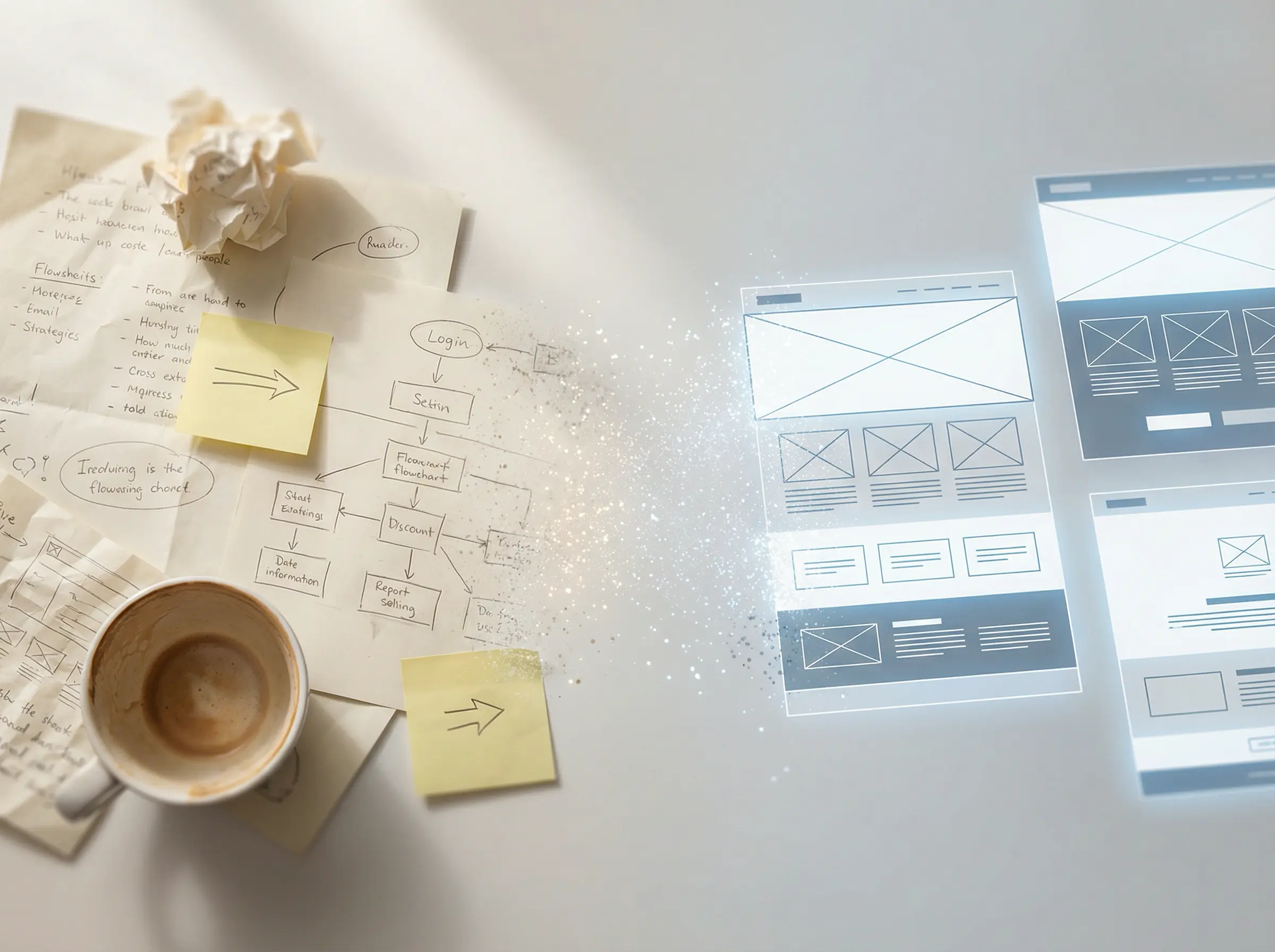
Most Websites Fail Before a Single Pixel Gets Pushed
Not because the design is ugly. Not because the developer made mistakes. They fail because nobody answered the hard questions first.
Questions like:
- Who is this for?
- What do they need to hear?
- What should they do next?
Without answers, you get a website that looks fine but performs poorly. Pretty pages that don't convert. A digital brochure that collects dust.
The Gap Between Strategy and Execution
Here's what typically happens:
- A business decides they need a new website
- They hire a designer
- They pick colors, choose fonts, approve layouts
- Six weeks later, they have a shiny new site
Then nothing changes. Same trickle of inquiries. Same confusion from prospects. Same feeling that something's missing.
The problem isn't the website. The problem is what came before it.
Or rather, what didn't.
Strategy Isn't a Luxury. It's the Foundation.
Before we design anything at Studio FLACH, we work through a process called Strategic Clarity. It's not glamorous work. No mood boards. No typography discussions. Just questions, research, and thinking.
We dig into:
- Who the business actually serves best
- What problems those people face
- Why they'd choose this business over alternatives
- What transformation the business provides
This isn't busywork. Every answer shapes what the website becomes.
How Positioning Becomes Page Structure
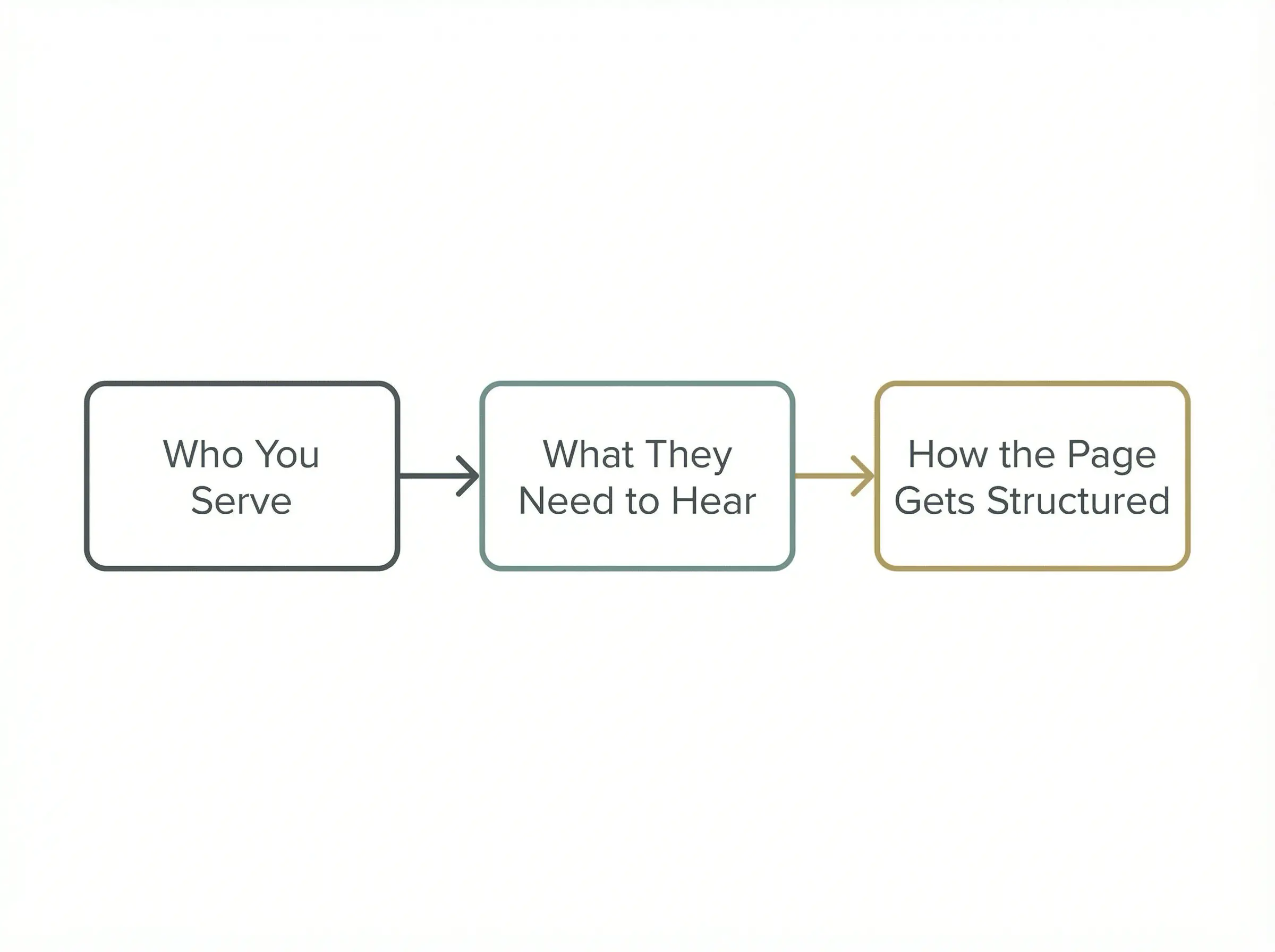
Your homepage exists for one reason: to get the right people to take the next step.
That sounds simple. It isn't.
The "right people" part requires knowing exactly who you serve. Not "small businesses" or "entrepreneurs." Specific humans with specific problems at specific stages of their journey.
Once you know who they are, you know what they need to hear first. You know their objections before they voice them. You know the proof they need to see.
This clarity dictates your page structure:
- The headline addresses their primary concern
- The sections that follow answer their questions in the order they'd naturally ask them
- The call to action appears exactly when they're ready for it
Your Message Hierarchy Determines Visual Hierarchy
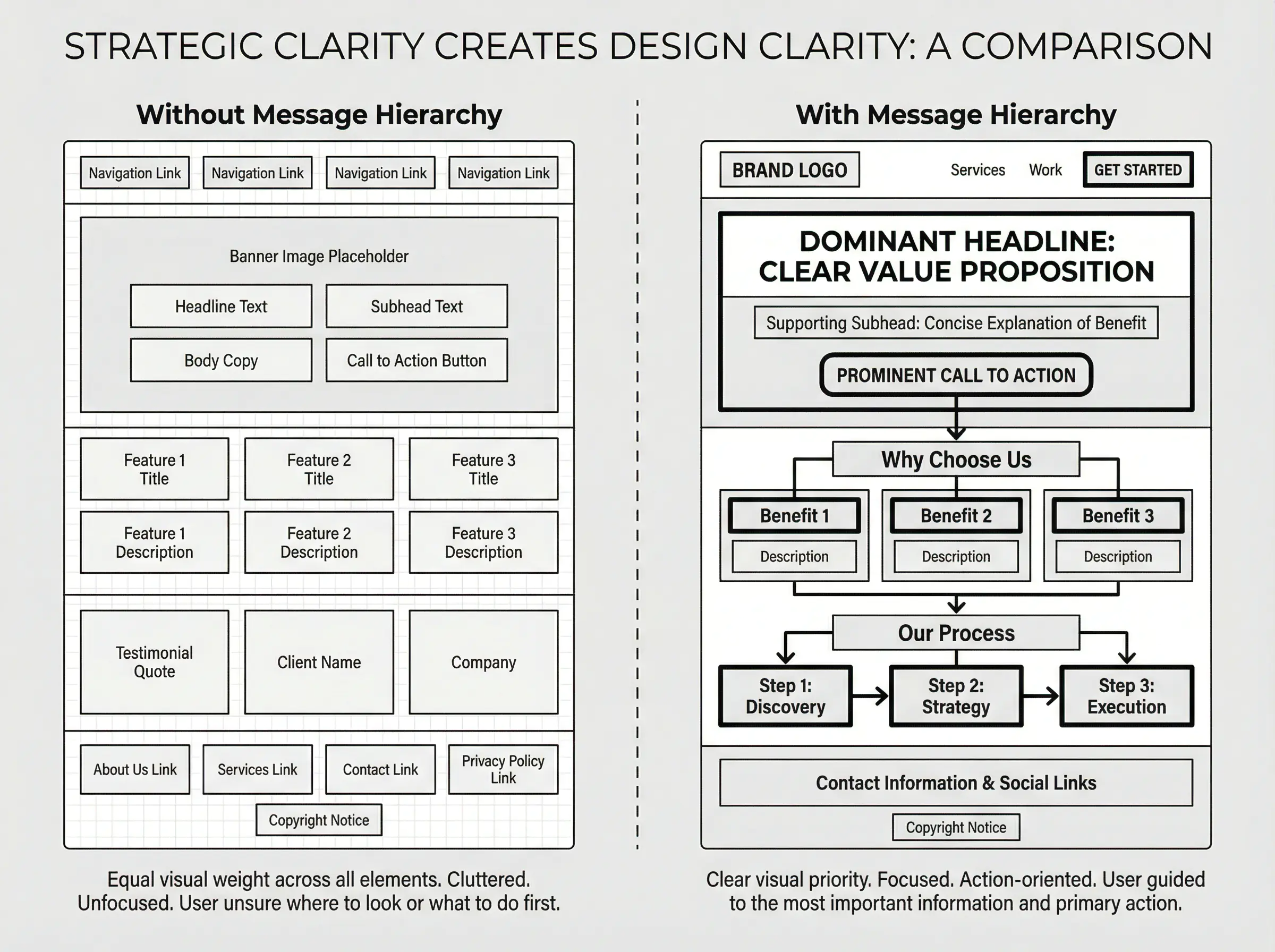
Design decisions that seem arbitrary are actually strategic choices in disguise.
- What's largest on the page? That's what matters most to your visitor.
- What appears above the fold? That's the promise that earns their scroll.
- What gets repeated? That's the core message you want burned into memory.
A skilled designer doesn't just make things look good. They use visual weight, spacing, and composition to guide attention. But they can only do this if they know what deserves attention.
Hand a designer vague direction and you'll get a vague result. Hand them a clear message hierarchy and they'll create something that works.
Content Comes From Strategy, Not Lorem Ipsum
Placeholder text is a crutch. It lets everyone pretend the hard work is done when it hasn't started.
Real content emerges from strategic thinking:
- Your headline comes from your positioning
- Your body copy addresses specific pain points
- Your testimonials prove specific claims
- Your FAQ handles specific objections
When you skip strategy, you end up filling pages with generic statements that could describe any business in your industry.
"We're passionate about quality."
"Our team has decades of experience."
"We put customers first."
These phrases are empty because they're true for everyone. They say nothing because they came from nothing.
The Thread That Connects Everything
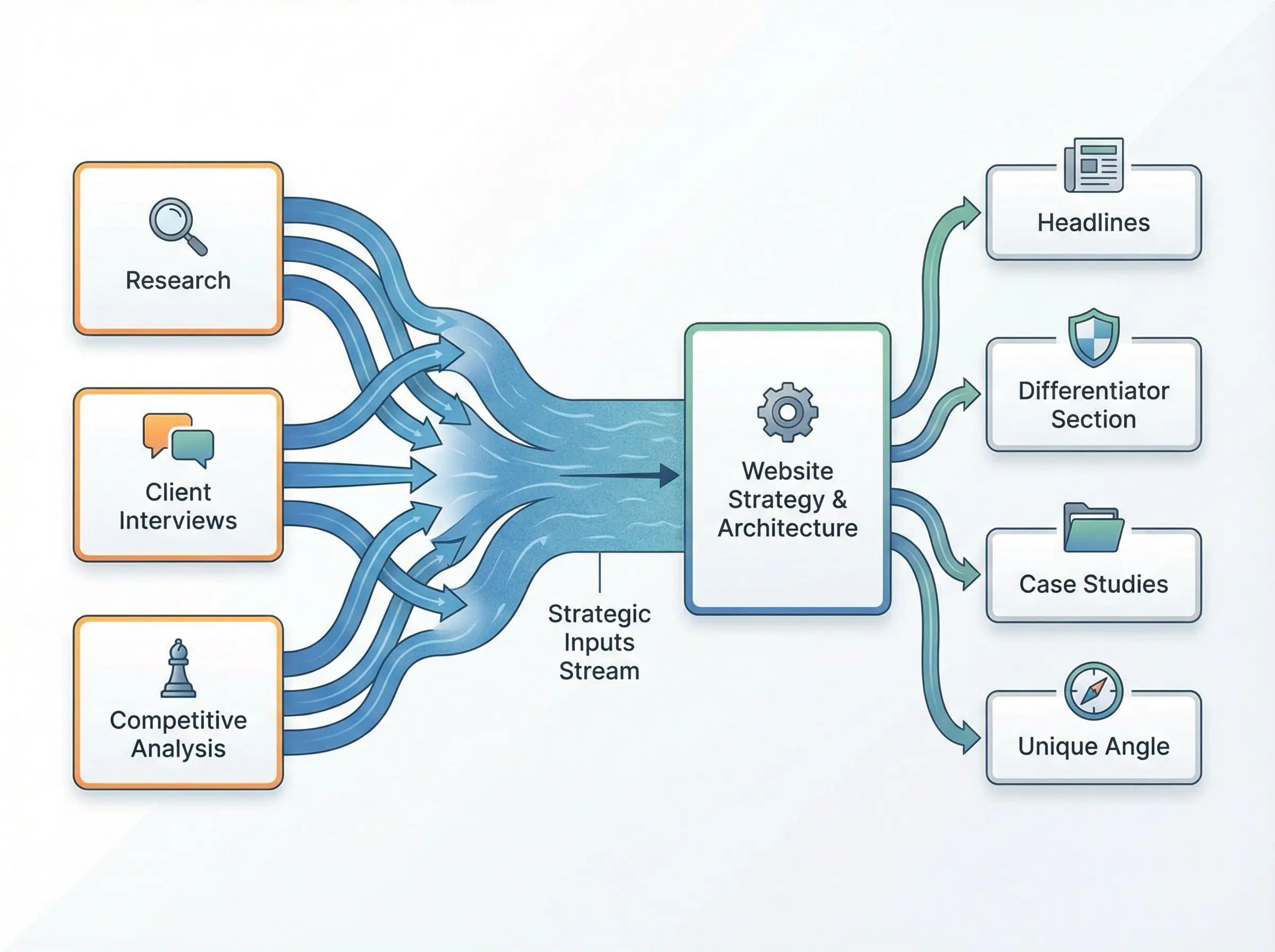
Watch how this flows:
From Research to Headlines
Strategic research reveals that your best clients share a specific frustration with their current situation. That frustration becomes your headline hook.
From Interviews to Differentiation
The research also uncovers why those clients chose you over alternatives. That becomes your differentiator section.
From Conversations to Case Studies
Client interviews surface the transformation they experienced. That becomes your case study structure.
From Analysis to Angle
Competitive analysis shows gaps in how others communicate. That becomes your unique angle.
Nothing is invented from thin air. Everything traces back to real information about real people making real decisions.
Why This Order Matters
You might wonder: can't we figure this out as we design?
You can try. Many do. The result is typically endless revisions, scope creep, and a final product nobody loves.
Design Without Strategy Is Guessing
Every decision requires asking "what should go here?" with no clear answer. Stakeholders disagree because there's no shared understanding of what success looks like. The project drags because nobody can evaluate whether something's working.
Design With Strategy Is Execution
The questions are already answered. The designer's job becomes translating words into visuals, structure into layout, priority into hierarchy. Decisions happen faster because everyone shares the same criteria.
What This Looks Like in Practice
A recent client came to us after two failed website projects. Both times, they'd jumped straight into design. Both times, they'd ended up with sites that "didn't feel right."
We spent four weeks on Strategic Clarity before opening any design software:
- We interviewed their best clients
- Analyzed their competitors
- Mapped their buyer's journey
- Defined their positioning
When we finally started the website, everything moved quickly.
Headlines wrote themselves because we knew exactly what to say. Page structure was obvious because we knew the information hierarchy. Design choices were easy to evaluate because we had clear success criteria.
The site launched in half the time of their previous attempts. More importantly, it actually converts.
The Investment Pays Forward
Strategic work before design isn't additional cost. It's insurance against wasted effort.
- Every hour spent on clarity saves multiple hours in revisions
- Every question answered early prevents arguments later
- Every insight captured becomes an asset you'll use for years
The positioning work informs your website, yes. But it also shapes your social media voice, your sales conversations, your pitch deck, your hiring posts.
Strategy compounds.
Starting With the End in Mind
Before your next website project, ask these questions:
Who specifically are we trying to reach?
Not demographics. Real humans with real problems.
What do they need to believe before they'll take action?
List every objection, concern, and question.
What makes us the obvious choice for these specific people?
Not generic strengths. Specific reasons this audience would choose us.
What's the one action we want them to take?
Not three options. One clear next step.
If you can't answer these clearly, you're not ready to design. You're ready to do the thinking that makes design possible.

